

Over the past year, a new narrative has emerged across the technology industry: software is over, and companies will just build their own systems with AI.
It is a provocative claim. It is being amplified by real progress from companies like Anthropic and OpenAI. It also contains a kernel of truth.
Yes, AI is fundamentally changing how software is created. Yes, organizations now have more power to build and customize tools themselves. Yes, development cycles are getting dramatically faster.
But this is often framed as the wrong debate.
The real shift is not software versus building your own systems.
It is this:
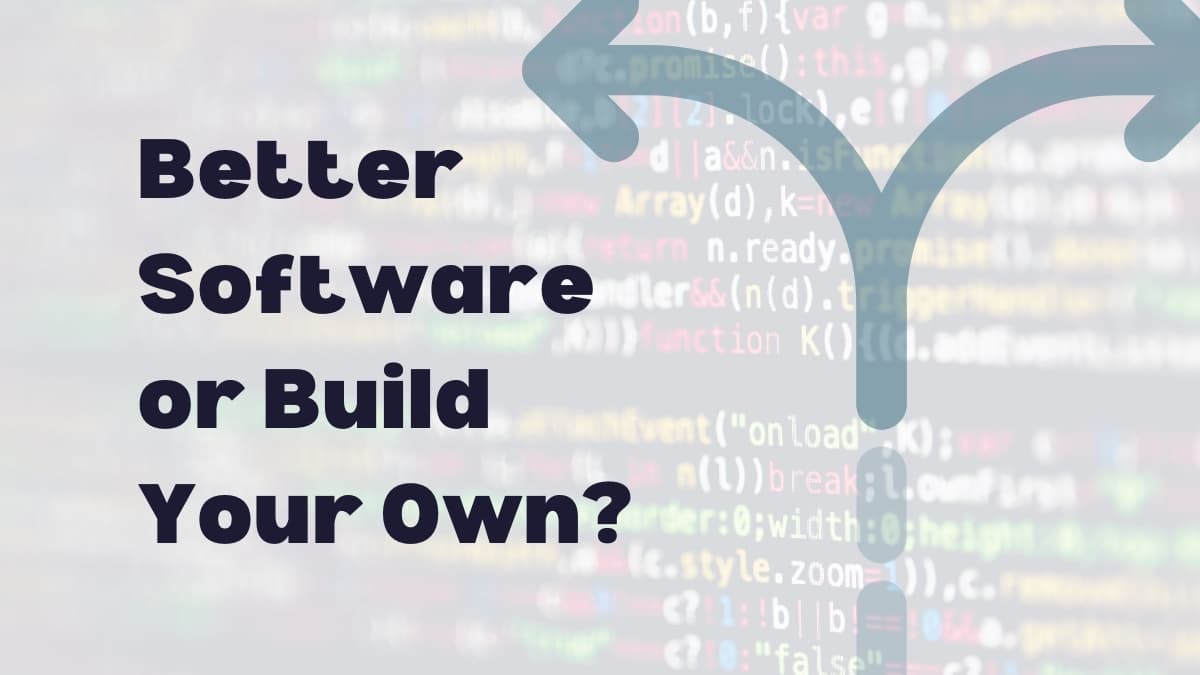
- Software of the future versus build your own
That distinction matters.
Why "Software of the Future vs Build Your Own" Is the Real Decision
Organizations are no longer choosing between today's software and internal development.
They are choosing between building internally and a software market that is becoming:
- Cheaper
- More specialized
- Faster to evolve
- More competitive
In other words, AI is improving both options at the same time.
If a manufacturing company can generate a basic CRM with AI, software companies can also use those same tools to build stronger products faster. The bar rises for everyone.
For organizations evaluating long-term systems, this means the buy option may actually become more compelling, not less, especially when reliability and risk matter.
The Myth That Everyone Will Build Their Own Software
AI has lowered the barrier to entry for development. That is real, and it is powerful.
What once took months can now be prototyped in days, or even hours.
But building a working app is not the same as building a production-grade system.
Production systems still require:
- Infrastructure and cloud architecture
- Security and compliance controls
- Vendor integrations and API management
- Data governance and privacy safeguards
- Edge-case handling and failure recovery
- Ongoing maintenance, monitoring, and support
Generating code is often the easy part. Running that software reliably for years is the difficult part.
Many AI optimists argue that agents will eventually cover this operational burden. That may happen over time, but most organizations are not there yet, technically or operationally.
The Human Lag Between Capability and Adoption
Even when technology capabilities move fast, adoption inside organizations does not.
That lag is driven by real constraints:
- Long vendor contracts
- Sticky legacy data providers
- Risk management requirements
- Internal politics and competing priorities
- Legitimate fear of disruption
Organizations with mature governance rarely sprint into major system changes. In an AI-driven environment, that caution can be strategic, not slow.
The Security Reality: If AI Builds Software, AI Also Attacks It
Security is often missing from the "everyone builds" narrative.
Every major technology shift increases both defensive and offensive capability.
If AI makes software easier to build, it also makes it easier to:
- Discover vulnerabilities
- Automate attacks
- Generate exploit playbooks
- Reverse engineer systems
- Scale malicious activity
The same force that accelerates creation accelerates exploitation.
If every organization owns a custom internal stack, the attack surface across industries expands significantly.
Security, resilience, and compliance expertise remain specialized disciplines. Most organizations do not want to own this entire problem internally.
Modern Software Is an Ecosystem, Not a Single App
Real-world systems are rarely one clean application. They are ecosystems composed of:
- Microservices
- Third-party APIs
- Authentication providers
- Cloud infrastructure
- Data pipelines
- Monitoring and analytics tooling
- Vendor dependencies
Even with AI assistance, operating these ecosystems requires architecture choices, trade-offs, and ongoing operational discipline.
This is one reason many teams still prefer specialized software providers. They do not want to manage every underlying service relationship on their own.
The More Likely Future: Software Gets More Accessible and More Specialized
A more realistic future is not the death of software. It is software evolution.
AI will enable:
- Faster development
- More niche solutions
- Lower costs
- Greater customization
- More competition
Some categories will become commoditized. Others will become more targeted and valuable.
Instead of broad one-size-fits-all platforms, organizations will gain access to tools tailored to specific workflows, regulations, and sectors.
In complex environments like healthcare and community services, this specialization is especially valuable. If you want a practical example of how AI shifts software expectations, see our perspective on how reporting is evolving in the age of AI.
The Core Trade-Off Organizations Will Still Make
AI changes economics, but not the core decision framework.
Build Internally
- Maximum control
- Higher responsibility
- Internal expertise required
- Ongoing maintenance burden
Buy or Adopt Software
- Faster deployment
- External expertise
- Lower operational risk
- Shared innovation costs
The difference now is that future software will likely be:
- More affordable
- More configurable
- More specialized
- More rapidly evolving
So yes, organizations will build more than they used to.
But many will still buy, because buying is improving too.
How Organizations Should Position Themselves Right Now
Rather than reacting to hype cycles, organizations should prepare strategically.
1. Prioritize Flexibility Over Lock-In
Avoid long-term commitments that reduce adaptability.
2. Choose Open and Configurable Systems
Look for systems that integrate easily, support customization, and keep your data portable. Teams evaluating AI-enabled care operations should prioritize this from day one.
3. Invest in Data and Process Maturity
AI amplifies existing foundations. Clean data and clear workflows produce better outcomes.
4. Focus Internal Teams on Strategy, Not Infrastructure
Internal talent is most valuable when focused on mission outcomes, service quality, and innovation, not maintaining commodity plumbing.
The Role of AI in Software Teams
AI will take a larger share of development work over time. That trend is already visible.
But production software is still shaped by:
- Architecture decisions
- Domain expertise
- Operational experience
- Continuous iteration
- Human judgment
Software work is becoming less about typing code and more about designing systems responsibly.
The Bottom Line
Software is not dying.
It is becoming faster to build, more competitive, more specialized, more affordable, and more accessible.
Organizations will have more options than ever before, including building internally when that is the right move.
But the need for secure, reliable, production-grade systems is not going away.
The future is not about eliminating software vendors.
It is about choosing the right balance between building and adopting in a rapidly changing environment.
Want to evaluate your build-vs-buy strategy for AI-era operations? At CarePlan AI, we help teams deploy practical, configurable software without inheriting unnecessary infrastructure burden. Explore CarePlan AI →